 The Wellbeing Notebook
Linda M. woke up at 4 a.m. again, this time because her right shoulder had locked into a position that sent a hot, electric jolt down through her elbow every time she tried to shift under the covers. She lay there, eyes open, listening to her husband breathe, counting the months since this had started. Three years. One thousand and ninety-some days of mornings that began with the question: which part of me won’t work today?
At 58, Linda was not someone who sat still easily. A retired school administrator from Houston, she had spent her career on her feet — walking hallways, organizing events, lifting boxes of textbooks before anyone else volunteered. Her body had always cooperated. Until it didn’t.
The 3-year search for an answer
It started in the fall of 2023 with stiffness in both knees that she dismissed as “overdoing it at the gym.” Within six months the stiffness had migrated — wrists, shoulders, the small joints of her hands. Getting dressed took deliberate effort. Gripping a jar lid became a negotiation.
Her primary care physician prescribed naproxen. When that plateaued, a rheumatologist added hydroxychloroquine. When that didn’t move the needle, they tried a short course of low-dose prednisone. Each intervention offered a brief window of relief — a week, maybe two — before the inflammation came roaring back, sometimes worse than before.
“I remember sitting in the exam room thinking: we keep putting out small fires, but nobody is asking why the house keeps catching fire in the first place.”
Linda’s frustration was not unusual. According to the CDC, nearly 59 million Americans have been diagnosed with some form of arthritis, and a substantial subset report that conventional medications fail to provide lasting improvement.1 The pattern is the same: manage the symptom, hope the cause resolves itself.
What every other doctor missed
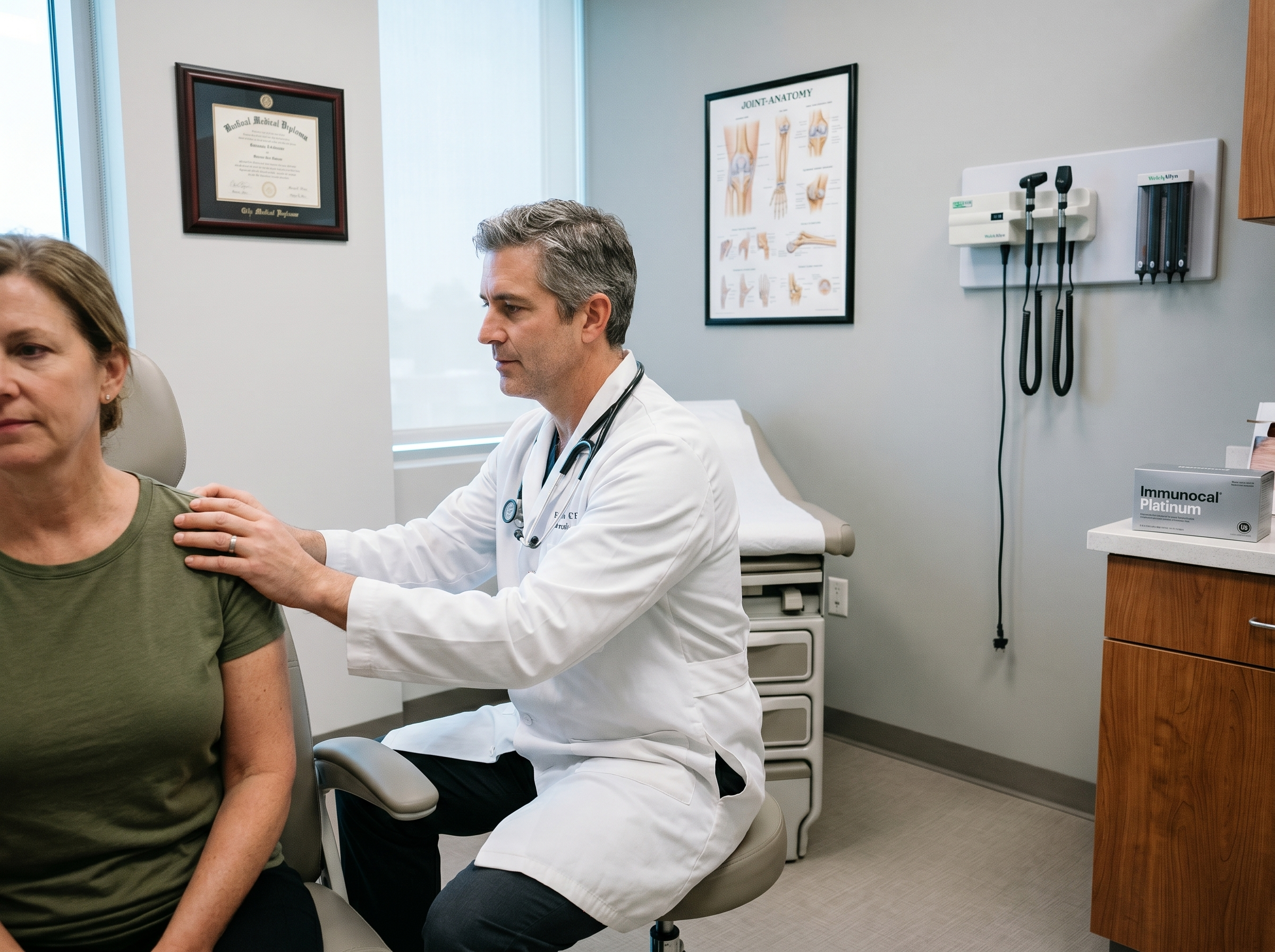
In early 2026, Linda’s daughter forwarded her a short video clip from a physician’s social media account. In the video, a doctor at a mid-sized US clinic was holding up a silver box while explaining something about a protein and “49 years of research.” The word he kept using was glutathione.
Linda had never heard of it. Most people haven’t — at least not in the context of joint health. But the science behind it is neither new nor obscure. More than 220,000 peer-reviewed papers have been published on glutathione since its discovery in 1888.2 It is the body’s most abundant intracellular antioxidant, and its role in regulating the inflammatory cascade is now well-documented across multiple disciplines.
What caught Linda’s attention was the mechanism. Glutathione doesn’t mask pain the way an NSAID does. It operates upstream — at the cellular level where oxidative stress triggers the inflammatory signaling that eventually reaches the joints. When glutathione levels are adequate, the body can regulate that signaling on its own. When levels drop — as they naturally do after the age of 30, at a rate of roughly 10–15% per decade — the inflammatory cascade has less opposition.*
The problem is that you cannot simply swallow glutathione. Oral glutathione supplements are largely destroyed in the digestive tract before they reach the cells that need them. The molecule is too fragile. What the body actually needs is the raw material — a bioactive protein called cysteine-rich whey protein isolate — to manufacture its own glutathione inside the cell.*
The 49-year research nobody talks about
The research Linda stumbled into traces back to Dr. Gustavo Bounous at McGill University in the late 1970s. His team was the first to isolate a specific undenatured whey protein fraction capable of raising intracellular glutathione levels without being degraded during digestion. Over the next four decades, that research was refined, peer-reviewed, replicated, and eventually led to a product that earned something almost unheard-of in the supplement world: a listing in the Physicians’ Desk Reference (PDR).*
The PDR is the same compendium doctors consult for prescription medications. To appear in it, a product must meet rigorous documentation standards. The fact that a natural supplement qualified at all was notable enough that it drew attention from practitioners across the country who were looking for evidence-based options for patients who had failed conventional protocols.*
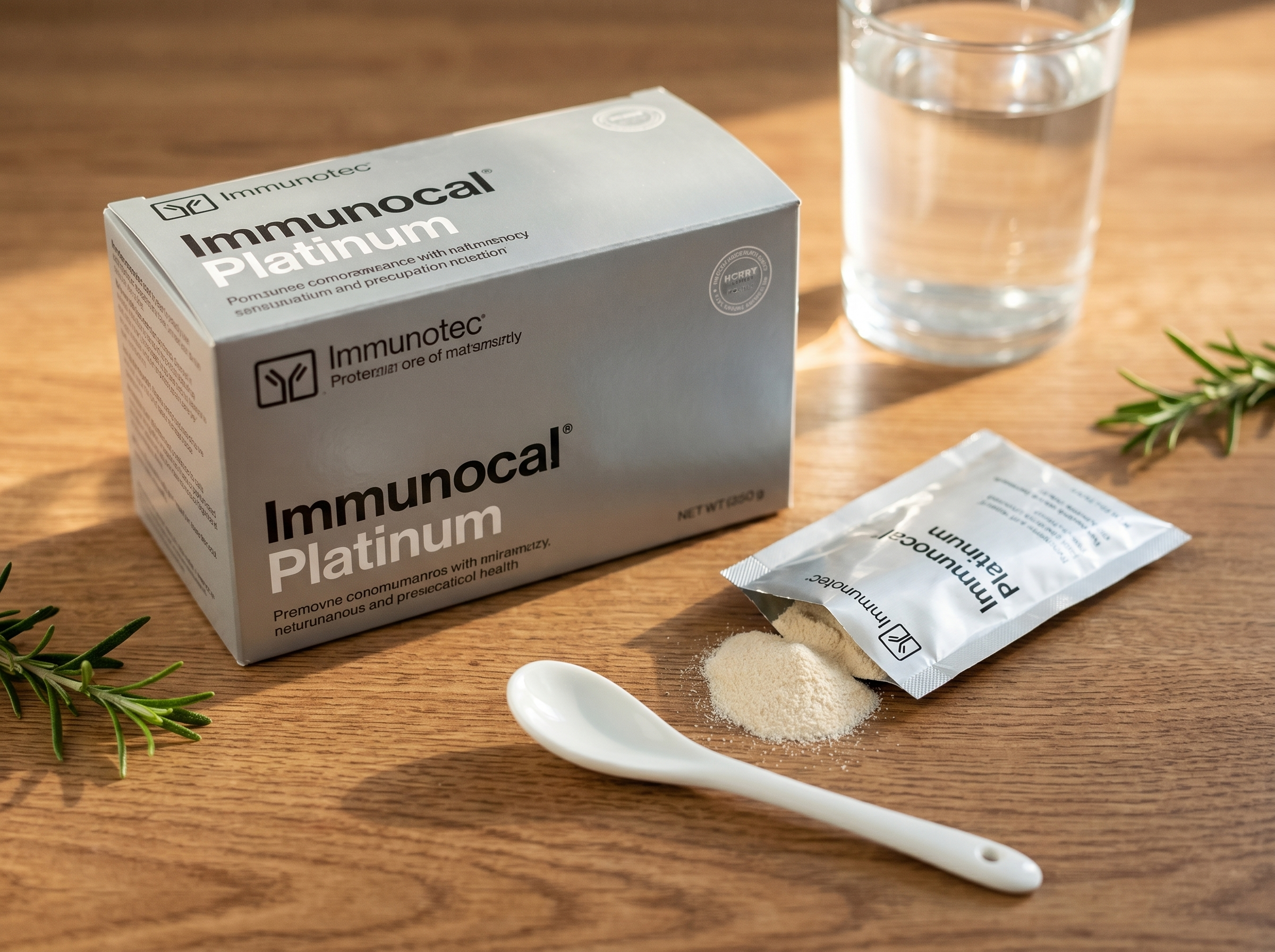
Immunocal
A clinically researched, undenatured whey protein isolate designed to support the body’s own glutathione production at the cellular level.* Listed in the Physicians’ Desk Reference.
- Supports the body’s natural antioxidant defense system*
- Helps maintain healthy inflammatory response*
- Backed by 49 years of continuous scientific research*
- Listed in the Physicians’ Desk Reference (PDR)*
- Contains CMP™ and RMF for additional joint and metabolic support*
What happened after 90 days
Linda’s physician started her on a Clinical Protocol: four sachets per day, mixed into cold water, taken between meals. The first two weeks were unremarkable. “Honestly, I almost stopped,” she admits. “I’d been burned before.”
But around week three, something shifted. Not a dramatic overnight transformation — more like a slow dimming of the volume knob on her pain. She could button her blouse without wincing. She could grip the steering wheel without adjusting her fingers every few minutes. By month two, her daughter noticed before she did: “Mom, you walked from the parking lot without stopping once.”
“It wasn’t that the pain disappeared on a Tuesday. It was that one morning I woke up and realized I’d slept through the night. I couldn’t remember the last time that had happened.”
At her 90-day follow-up, Linda’s physician documented a meaningful reduction in her inflammatory markers. He was not surprised. He had seen similar trajectories in other patients who had failed conventional protocols and responded to glutathione precursor supplementation. “When you give the body what it actually needs to regulate itself,” he told Linda, “results aren’t a surprise — they’re a prediction.”*
What this is — and what it isn’t
Immunocal is not a medication. It does not claim to cure, treat, or diagnose any disease. It is a natural health product that provides the body with the precursor it needs to produce its own glutathione — the master antioxidant already present in every cell.*
It is not a quick fix. Most practitioners recommend a minimum 90-day protocol to allow the body’s glutathione levels to rebuild and for downstream effects to become measurable. The right protocol depends on your situation: severity, age, and what you’re dealing with all factor into the recommended dosage.
That’s exactly why the chat below exists, a wellness advisor walks through your situation and matches you to the protocol that fits.



Reader Comments (4)
I sent this to my mom. She’s been dealing with the exact same thing for years and no one ever explained the glutathione angle. Bookmarking for her appointment next week.
Been on this for 6 months now. Started with the Active Protocol, moved to Foundation for maintenance. The difference in my morning routine is night and day. I actually look forward to mornings again.
My doctor is actually the one who recommended I read this article. He’s been using it with several of his patients. Interesting to see how the science works behind it.
The part about glutathione declining after 30 explains a LOT. Didn’t expect this article to land like it did. Just started the chat now.